Choosing Upholstery Fabric for Island Living: Sun, Humidity, Kids and Pets
The right fabric depends less on the pattern you love and more on where the piece lives and who sits on it.
October 27, 2026 · 4 min read
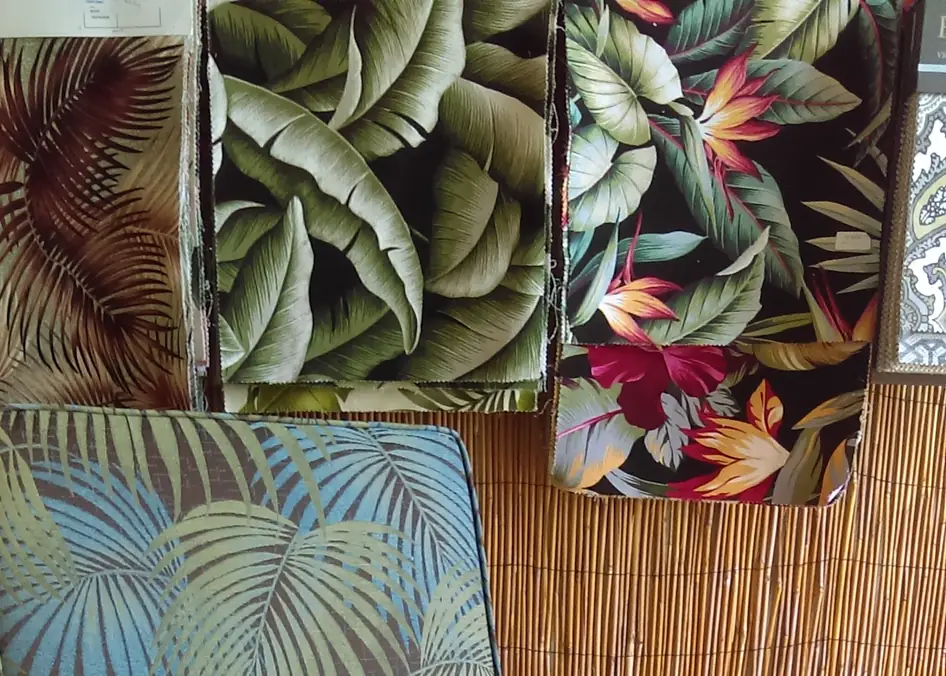
Walk into a room full of fabric samples and the first thing you notice is color and pattern. That's the fun part, and it matters. But on O'ahu there's a second question that matters just as much: where is this piece going to live, and what will it put up with?
A sofa in an air-conditioned living room and a loveseat on a lanai facing the afternoon sun are two very different jobs. At John's we carry designer fabrics with thousands of design choices, from modern and sleek to tropical and casual, so there's rarely a shortage of options. Narrowing them down is where a little knowledge helps.
Indoor fabric or outdoor fabric
Start here, because it settles a lot. Outdoor fabrics are made to handle sun, moisture and frequent wiping. Indoor fabrics are made for comfort and looks and usually can't take weeks of direct sunlight or a damp afternoon.
If a cushion will sit outside, or on a lanai with open sides, choose an outdoor fabric. If it's a window seat in a bright room, an outdoor fabric can also be a smart choice, because glass doesn't stop all the sun that fades colors. We stock both kinds, indoor and outdoor, so you can compare them side by side.
Sun on the lanai
Sun fades fabric. It does it slowly, so you often don't notice until you move a cushion and see the darker color underneath. Deep reds, dark blues and bold tropical prints tend to show fading sooner than natural tones such as sand, cream or soft gray.
If your lanai gets hours of direct sun, look for a fabric made for outdoor use, ask whether the maker lists a sun-fade rating, and think about a color that will age gracefully. A pattern with several colors hides uneven fading better than one solid dark shade.
Humidity and the trade winds
Windward O'ahu is damp. Moisture sits in cushions and takes a long time to leave. Fabrics that dry quickly and breathe do better than heavy, tightly sealed ones in a room that rarely gets dry air.
Ask about the foam and backing too, not just the top fabric. A good cover over a cushion that stays damp inside is still going to smell stale. This is one more reason to consider outdoor-friendly fabrics for any cushion that sits near open doors and windows.
Kids and pets
Think about what the piece will actually go through. Sticky fingers, a dog that jumps up after the beach, a cat that sharpens its claws on the arm: all of these ask different things of a fabric.
- Tighter weaves and flatter surfaces usually hold up better. Loose loops and open textures can snag on claws.
- Patterns and mid-tones hide crumbs, fur and small spills better than a plain light color.
- Fabrics with a smooth, wipeable surface are easier to live with in a house full of kids.
- A removable, zippered cover makes cleaning much easier. We cover that in our article on cushions.
100% cotton or commercial grade
We offer fabrics from 100% cotton all the way up to commercial grade, and each has its place.
Cotton is soft, breathable and comfortable against the skin. It's lovely in a bedroom chair or a living room piece that sees gentle use. It can crease, absorb spills and fade in strong sun, so it suits protected spaces better than a busy family room.
Commercial grade is built for heavy use. It's the kind of fabric hotels and restaurants choose because it keeps its shape and look under constant sitting. For a family sofa, a dining chair that gets used every night or a piece in a rental, it's often the sensible choice. Some people love the look, others find it a little firmer in feel, which is why it helps to touch the sample.
When a fabric has a rating for abrasion or sun-fade, ask to see it. Numbers are only useful when you compare them across samples from the same maker, so let us show you what's printed on the sample card instead of guessing.
Always look at the sample in your own light
Shop lighting lies. Take the swatch home, set it on the piece itself and look at it in morning light, afternoon light and under your lamps. Check it next to your floors, walls and curtains. A color that looks calm in the store can turn loud in a sunny room.
Once your fabric is chosen and at the shop, the average turnaround is one to two weeks. So there's no need to rush the choice. Take the time to get it right.
Start with a photo
If you're not sure where to begin, send us a photo of the piece, tell us where it lives and who uses it, and we'll point you toward fabrics that suit the job. Email johnsupholstery@hawaii.rr.com or call (808) 236-2218, or come in and look through the samples in person.
John's Upholstery, (808) 236-2218
Call (808) 236-2218More articles
Reupholster or Replace? What to Check on an Old Frame First
The fabric is the easy part to change. The frame underneath decides whether a re-cover is worth doing.
How to Photograph and Measure Your Furniture to Get a Quote From a Photo
A handful of photos and a few measurements are all it takes to get a price before you commit to anything.