Reupholster or Replace? What to Check on an Old Frame First
The fabric is the easy part to change. The frame underneath decides whether a re-cover is worth doing.
October 27, 2026 · 4 min read
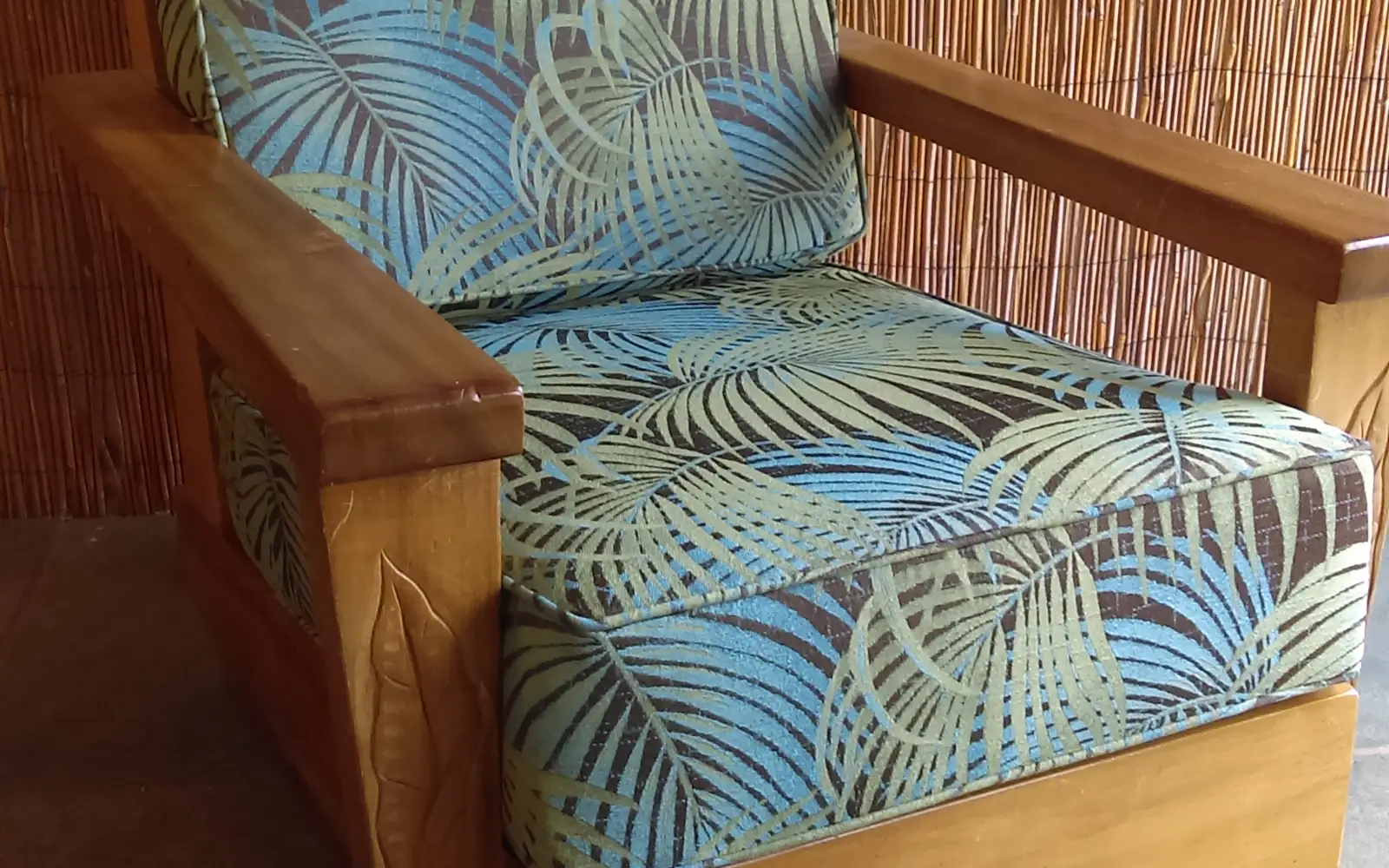
Most people who walk into an upholstery shop with a tired chair are really asking one question: is this thing worth saving? The answer almost never lives in the fabric. Fabric is the part you can see, and it's also the easiest part to change. The frame underneath is what decides whether a new cover will last another thirty years or disappoint you in two.
You don't need special tools to get a good read on a frame. You need ten minutes, a flashlight and a willingness to turn the piece over.
Start with the wiggle test
Sit down, then get up and grab an arm. Push it gently side to side. Do the same with the back and with each leg. A sound frame feels like one solid object. If an arm flexes on its own, the back rocks separately from the seat, or you hear creaks and clicks, a joint has probably loosened.
Loose joints are common on older furniture, and they're often a reason to re-cover rather than replace, because the old fabric and padding are off anyway. It still helps to know about them before you pick a fabric and make plans.
Turn it over and look underneath
Tip the piece onto a blanket and shine a light underneath. You're looking for a few specific things:
- Cracks in the wood, especially near the joints and where the legs meet the seat rail.
- Dried-out glue lines that have opened up into little gaps.
- Pinhead-sized round holes with fine powder nearby, which can mean old insect damage.
- Any part that looks like pressed board and has started to crumble at the edges.
- Webbing or springs that sag, or fabric underneath that has gone brittle.
Solid hardwood frames that were built with proper joinery tend to outlast the cheaper stapled-together frames sold today. If you can see real wood, tight joints and corner blocks, you're usually looking at something worth keeping.
Koa sets
On a koa set, the wood is the star. The arms, the legs and the exposed trim are what make the piece worth keeping. In many cases the wood is in better shape than the cushions, because what wears out first is the foam and the fabric. Flat, sunken seat cushions and a faded cover usually point to a cushion problem, not a furniture problem.
Before any work starts, point out which wood surfaces you want protected. A good upholsterer will keep the finish in mind while working around it.
Teak dining chairs
Dining chairs take a beating. People lean back on two legs, drag them across the floor and sit down hard. Check the back legs and the joints where the back meets the seat. If those are tight, the rest is usually straightforward. Many teak dining chairs have a simple seat that lifts out or is held by a few screws, which makes re-covering a quick, clean job.
A set of six chairs with five solid frames and one wobbly one is still a set worth saving. Mention the wobbly one when you ask for a quote.
Wing chairs
Wing chairs are the most layered of the three. There's shaping in the wings, padding over the arms, and usually springs or webbing in the seat. Sit in it and press your hands into the seat and inside back. Hard spots, sagging in one corner or a feeling of sitting on the frame mean the padding has compressed or the support underneath has stretched.
None of that means the chair is finished. It means the re-cover job includes more than fabric, and it's worth asking about before you decide.
When replacing makes more sense
Sometimes the honest answer is to let a piece go. Signs that point that way: a frame cracked through in several places, particleboard that crumbles when you press on it, a strong damp smell that doesn't leave the wood, or a piece you never really liked in the first place. Sentimental value is a real reason to keep something, though, and so is the fact that a lot of older furniture was built better than what's on the shelf today.
Our motto is Restoration, Reuse and Reduce! A well-built chair that gets a new cover stays out of the landfill, keeps its character and costs you a decision instead of a replacement. That's worth weighing against the alternative.
Get a real answer without leaving the house
Take a few photos: the whole piece from the front, one from the side, and one with the piece turned over so the underside shows. Add a close-up of anything that worries you. Measure the width, depth and height with a tape.
Then send it to John's Upholstery at johnsupholstery@hawaii.rr.com, or call us at (808) 236-2218. We'll tell you what we see, and once the fabric is chosen and at the shop, turnaround averages one to two weeks. You decide after you hear the price.
John's Upholstery, (808) 236-2218
Call (808) 236-2218More articles
Choosing Upholstery Fabric for Island Living: Sun, Humidity, Kids and Pets
The right fabric depends less on the pattern you love and more on where the piece lives and who sits on it.
How to Photograph and Measure Your Furniture to Get a Quote From a Photo
A handful of photos and a few measurements are all it takes to get a price before you commit to anything.