Cushions for a Pune'e, a Lanai Set or a Window Seat: Foam, Covers and Piping
A cushion looks simple, but foam, closure and edge details decide how it feels and how long it lasts.
October 27, 2026 · 4 min read
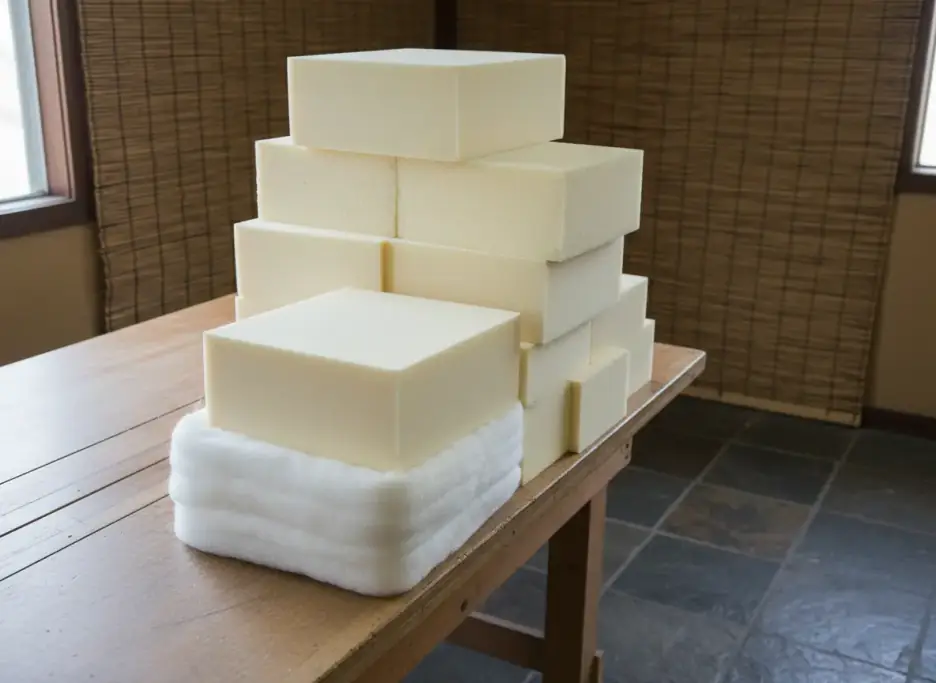
Cushions, cushions and more cushions: that's a big part of what we do at John's. Auntie's pune'e, the koa set, a lanai sofa, a window seat that has been sitting on a thin pad for years. They all have one thing in common. The cushion is what you actually touch, and when it's wrong, the whole piece feels wrong.
Here's what goes into a good cushion, so you can decide what you want before you ask for a quote.
Start with the foam
Foam is the heart of the cushion. We cut high-density foam to size, any size, so the cushion fits your piece instead of making you fit the cushion. High-density foam holds its shape longer than soft, light foam, which is why old cushions tend to sag into a hollow in the middle.
Firmness is a personal choice, but some general guidance helps:
- Seat cushions on a sofa or chair usually feel best medium to firm. Too soft and you sink in and struggle to get up.
- Back cushions can be softer, since you lean into them rather than sit on them.
- A pune'e, which doubles as a place to stretch out and nap, is often happiest with a firm base and a slightly softer top.
- Thicker cushions feel more generous but need a deeper frame to sit in.
If you're not sure, think about the one seat in your home that feels just right and tell us about it. We can work from that.
Wrapping and shape
A layer of soft batting wrapped around the foam rounds the edges and keeps the fabric from looking like a box. It also makes a cover easier to slip on and off. For a crisp, tight look, the foam goes in with little or no wrap. For a softer, more relaxed look, add more. Tell us which feel you like.
Removable covers or sewn closed
This is one of the biggest choices, and neither answer is wrong.
A zippered cover comes off. You can wash or replace it, and you can swap the foam later without redoing the whole cushion. For a pune'e or a lanai set that sees a lot of sand, sunscreen and wet swimsuits, that's a real benefit. Check the care label on the fabric before you wash anything, since some fabrics are not meant to go in a machine.
A sewn closure has no zipper at all. The edge is cleaner and there's nothing to feel through the fabric. It suits cushions you won't take apart, such as a decorative bench pad. The trade-off is that the cover can't come off, so fixing a stain or replacing the foam means opening the seam.
For outdoor cushions, ask us about zipper choices. A zipper that sits in damp, salty air all year is a different matter than one in a dry closet.
Piping
Piping is the narrow cord covered in fabric that runs along the seams of a cushion. It looks neat, and it also reinforces the edge, which is where cushions wear first. You can match the piping to the cover for a quiet look or use a contrasting fabric to make the shape stand out.
Piping works especially well on window seats and koa sets, where the lines of the wood frame are part of the look. If you like a plainer finish, you can skip it. Say so at the start.
Lanai sets
Lanai cushions live a harder life: sun, wind-blown rain, salt in the air and plenty of guests. Choose an outdoor fabric, and ask about foam that is designed to drain and dry more quickly than standard foam. Ask us about it. Standing the cushions on edge after rain helps them dry, and so does keeping them off a wet floor.
Window seats
A window seat is where measurements really matter. Few are perfectly square. Walls lean, corners curve and the ends often aren't the same width. Make a cardboard template if you can, trace the shape of the seat and write the thickness you want. Include a photo of the whole seat and the wall behind it. Bright windows fade fabric, so choose accordingly.
Pune'e and the koa set
Pune'e cushions are long, so the foam needs to be firm enough not to sag in the middle. Koa set cushions are usually several separate pieces, each fitted to its own seat. Measure them one at a time, and mark which one goes where. We've made cushions for both, in any size or shape.
Ready for a price?
Send us a photo of the cushion or the seat, along with length, width and thickness. Tell us if you want a zipper or piping, and which fabric you have in mind. Email johnsupholstery@hawaii.rr.com or call John's Upholstery at (808) 236-2218. Once the fabric is chosen and at the shop, the average turnaround is one to two weeks.
John's Upholstery, (808) 236-2218
Call (808) 236-2218More articles
Reupholster or Replace? What to Check on an Old Frame First
The fabric is the easy part to change. The frame underneath decides whether a re-cover is worth doing.
Choosing Upholstery Fabric for Island Living: Sun, Humidity, Kids and Pets
The right fabric depends less on the pattern you love and more on where the piece lives and who sits on it.